On December 19, 2025, the Mimosa birthing center abruptly learned that it would have to close to deliveries as of January 1, 2026. This sudden closure is not an isolated case. It reveals a broader reality: in Quebec, birthing centers and midwifery services continue to operate within a fragile framework, despite having existed for more than 25 years. Yet the government committed in 2008 to reaching 10% of prenatal care provided by midwives by 2018. Even today, these targets are far from being met.
The Mimosa case highlights numerous obstacles in midwifery services and for communities seeking them. Behind every interruption or delay in service delivery lies a broader reality: that of a system still struggling to fully recognize the right to choose where to give birth.
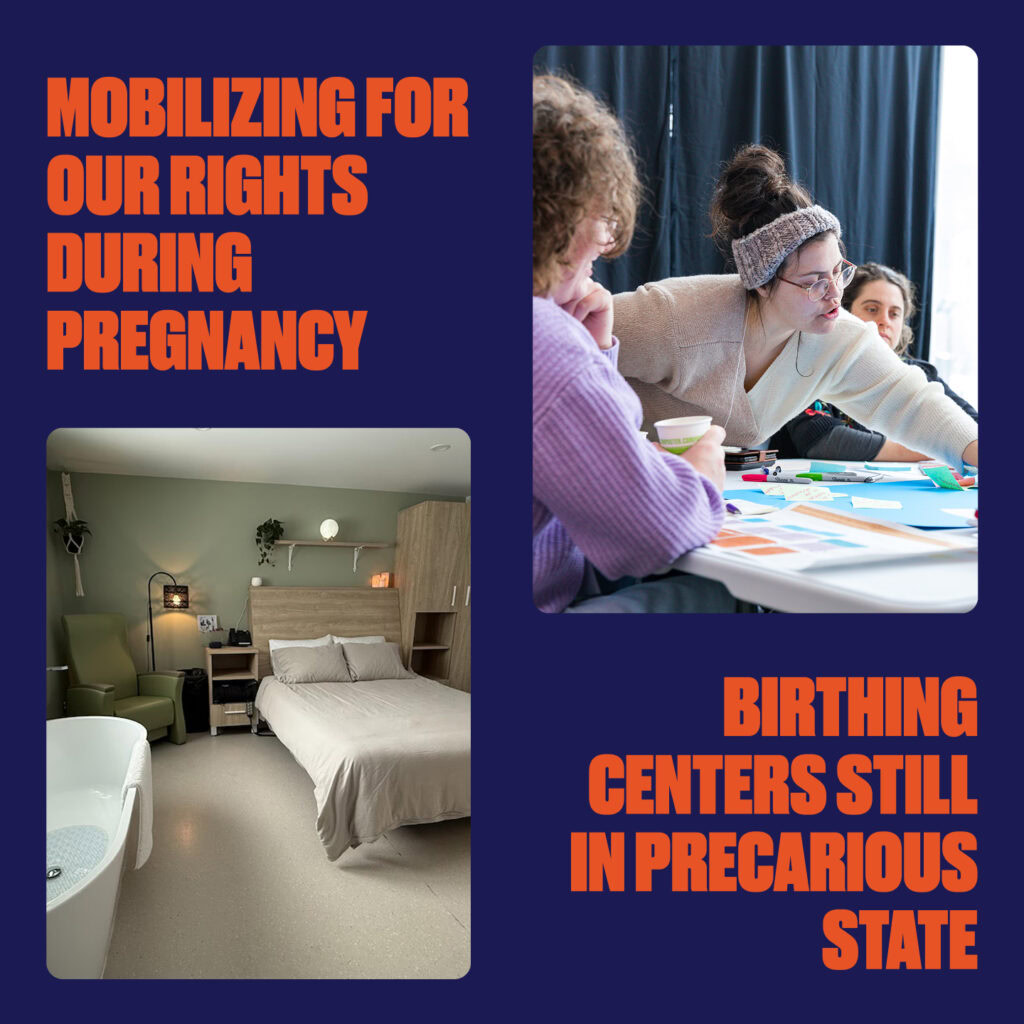
The difficulties begin well before the construction of a birthing center. The development of a midwifery service still depends on years of citizen mobilization. Despite growing demand from families and the mobilization of parent committees, access to birthing facilities remains limited in several regions.
“We are still waiting for this midwife to be hired. We are told there is a labor shortage. However, without a posting, no midwife can dream of this project to develop a midwifery service and an alternative birthing center in our region,” laments Tania Bond, spokesperson for the citizen group Entre mer et naissance sur la Côte-Nord.
In some regions, these obstacles are resulting in significant delays in service development. In Montérégie-Est, the planned service is facing the threat of losing its department head position due to insufficient investment. In Chaudière-Appalaches, the lack of swift solutions to ensure the Mimosa building met all requirements led to its abrupt closure.
The Chaudière-Appalaches Integrated Health and Social Services Centre (CISSS) had to submit three proposals to secure funding to bring the building up to code or relocate services. The consequences extend far beyond simply closing a facility.
Yet birthing centers are known for reducing medical interventions, lowering system costs, and increasing family satisfaction.
Citizen Mobilization: Continue, Coordinate, Amplify
Faced with these challenges, several communities are mobilizing to defend access to these services. Following the announcement of the closure, the citizens’ committee “Together for the Mimosa Birthing Centre” was established. This significant mobilization led to the filing of 115 complaints with the CISSS de Chaudière-Appalaches police station, denouncing the lack of transparency and community involvement in the proposed solutions.
“The current situation leading to the suspension of births at the Mimosa Birthing Centre stems from a long-standing problem. The building’s non-compliance and the need for relocation have been recognized for several years. Despite this, no concrete and lasting solution has been implemented within a timeframe that would ensure the complete continuity of services,” reads an excerpt from the complaint template used by families.
Where do I start to open an alternative birthing center?
In 2023, several citizen groups, with the support of the Movement, wrote to the then Minister of Health, Christian Dubé, seeking clarification on the approval processes for alternative birthing facilities. These are smaller facilities than the birthing centers traditionally developed in urban areas. At the time, no birthing rooms in community organizations had been approved, and the groups needed to understand the approval processes. The responses remained vague, and obstacles to their development persist in several regions.
In Charlevoix, they are not yet at the stage of demanding the location; the mobilization for the provision of services has been going on for more than ten years.
“For more than ten years, families in Charlevoix have been demanding these services. It’s time for concrete actions to be taken to ensure local care,” emphasizes Charlie Laplante Robert, a member of the Enfanter entre Mer et Montagne (Giving Birth Between Sea and Mountain) committee.
Some mobilizations do eventually bear fruit. In Val-d’Or, the Grands Pins birthing and early childhood center finally opened its doors after twelve years of campaigning. It is the first alternative birthing center in the region. In the Gaspé Peninsula, after many years of advocacy, the community contributed financially to the creation of a birthing room at the Maison des familles de Gaspé. This victory offers hope, but it also raises a fundamental question: why does access to essential public services depend on community fundraising?
Strengthening Our Collective Capacities Together
Faced with these challenges, several citizen groups are turning to the Movement for Autonomy in Childbirth to better organize themselves and make their demands heard. The Movement now wishes to further develop its approach of jointly strengthening the mobilization capacities of groups in the regions. Ultimately, we hope that these mobilizations will have a greater impact on access to perinatal services.
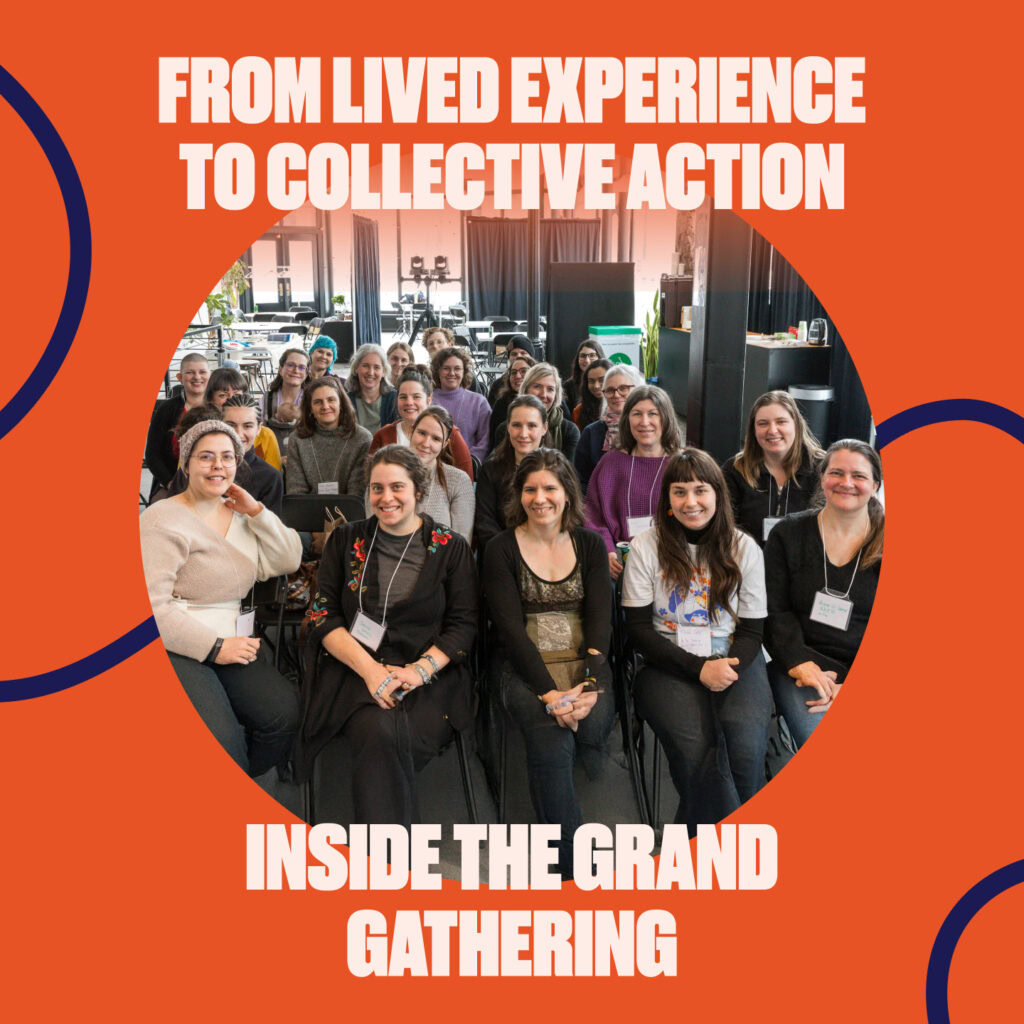
The new theory of change, presented at our Grand Gathering, aims in particular to deploy a national advocacy strategy to raise awareness of perinatal needs.
“We’re not just advocating for a building. We’re advocating for a different relationship with birth,” says Sarah Landry, coordinator at the Movement for Autonomy in Childbirth.
Birth centers embody an approach centered on physiology, respect for consent, decision-making autonomy, and continuity of care. The numerous obstacles to funding new centers implicitly call this possibility into question. Several activists fear that the specific nature of midwifery practice, its professional autonomy, its holistic approach, and its close ties to the community will be eroded.
The delays, temporary closures, and administrative hurdles are therefore not just about the buildings. They raise a fundamental question: what place does Quebec truly want to give to birth centers, alternative birthing spaces, and midwifery practice within its healthcare system?