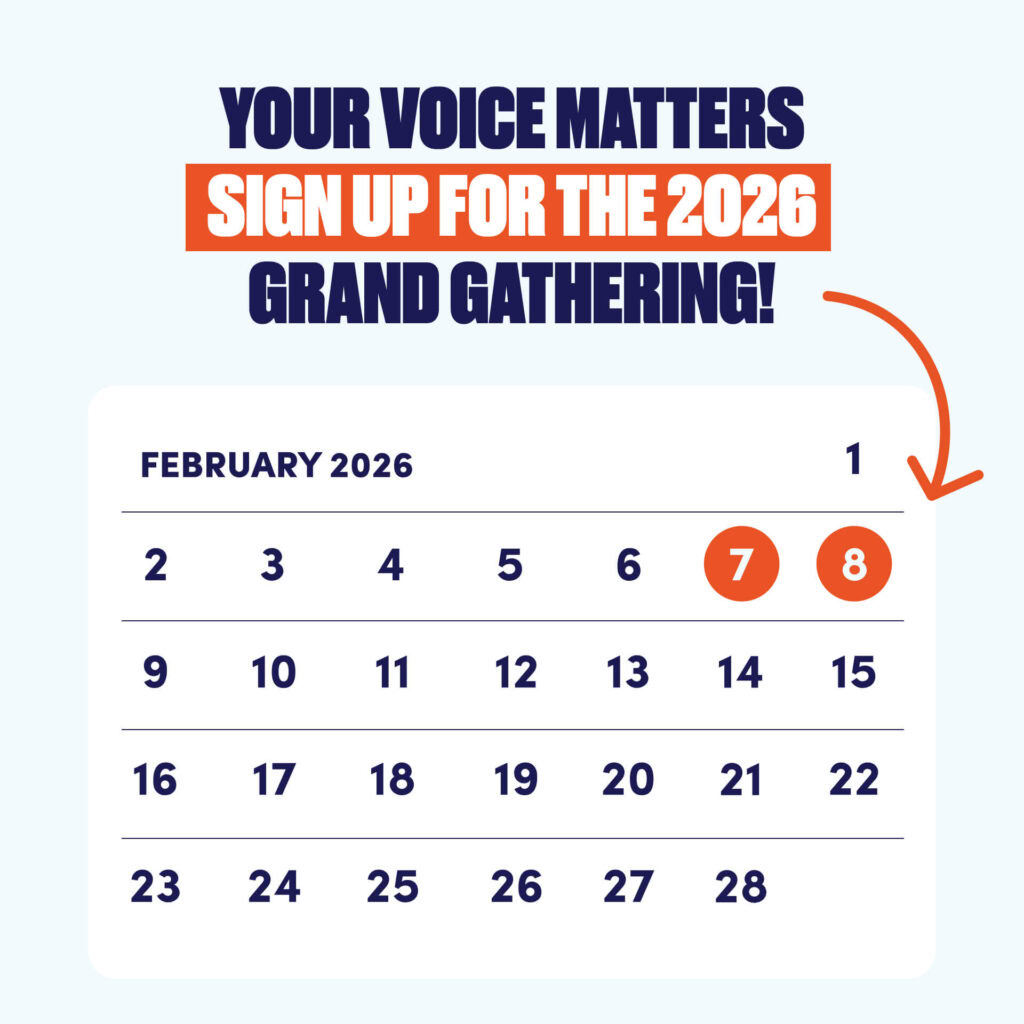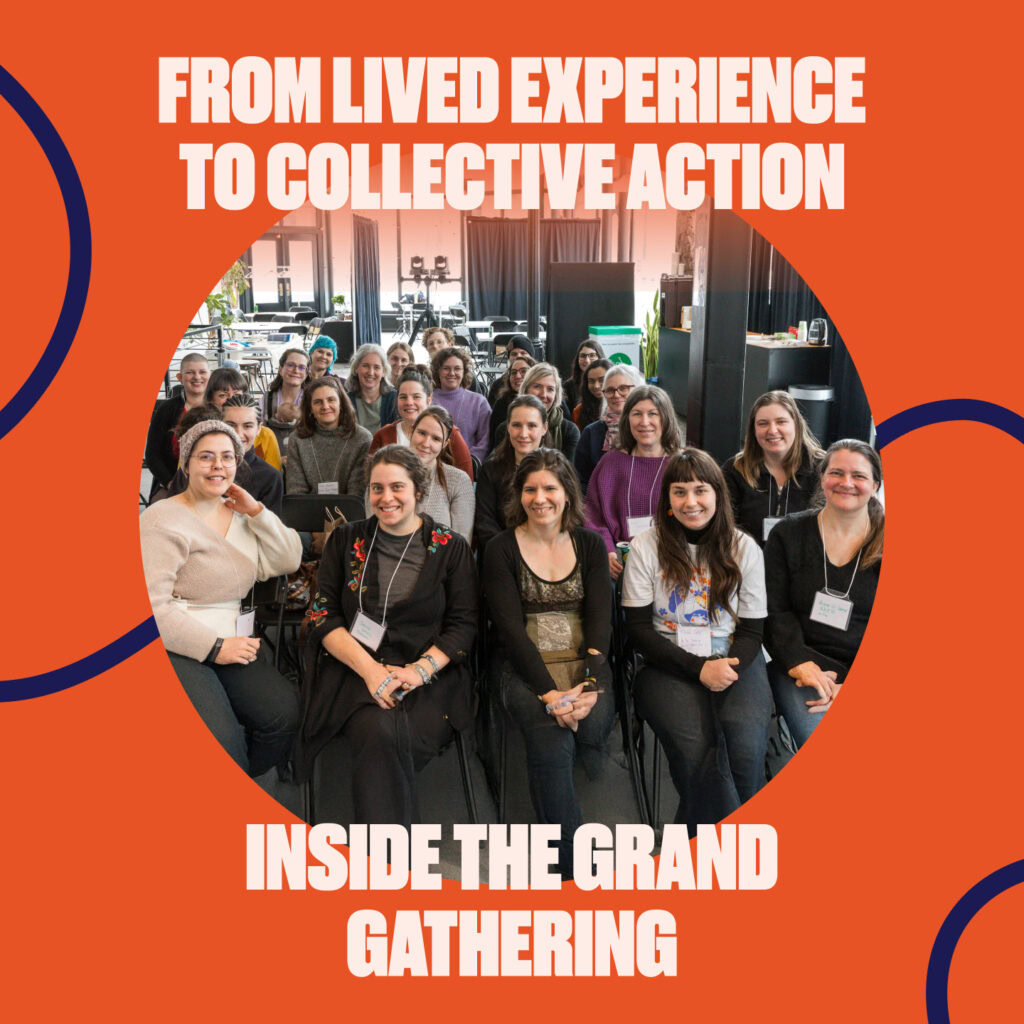
On February 7 and 8, at Espace Rodier in Montreal, our Grand Gathering was held, marking a pivotal moment for the defense of perinatal rights across Quebec.
For two days, participants were immersed in current perinatal realities and reflected together on actions to be taken for the future. Informative presentations, collaborative workshops, and a presentation of The Movement’s Theory of Change, provided the necessary framework to transform lived experiences into collective directions.
At the end of this period, the needs identified during the tour, the intended impacts, and the main solutions considered were clearly defined. These discussions will shape the Movement’s work for years to come. Here is a more detailed overview of how this direction took shape.
A Room that Reflected the Movement
For Sarah Landry, the Movement’s general coordinator, one of the most striking moments was not a particular workshop or conference, but simply the people present in the room. “Seeing all these people gathered together, the diversity of their backgrounds and their shared desire to transform the culture of birth, to improve both access to and the quality of perinatal care and services, deeply moved me,” she confides.
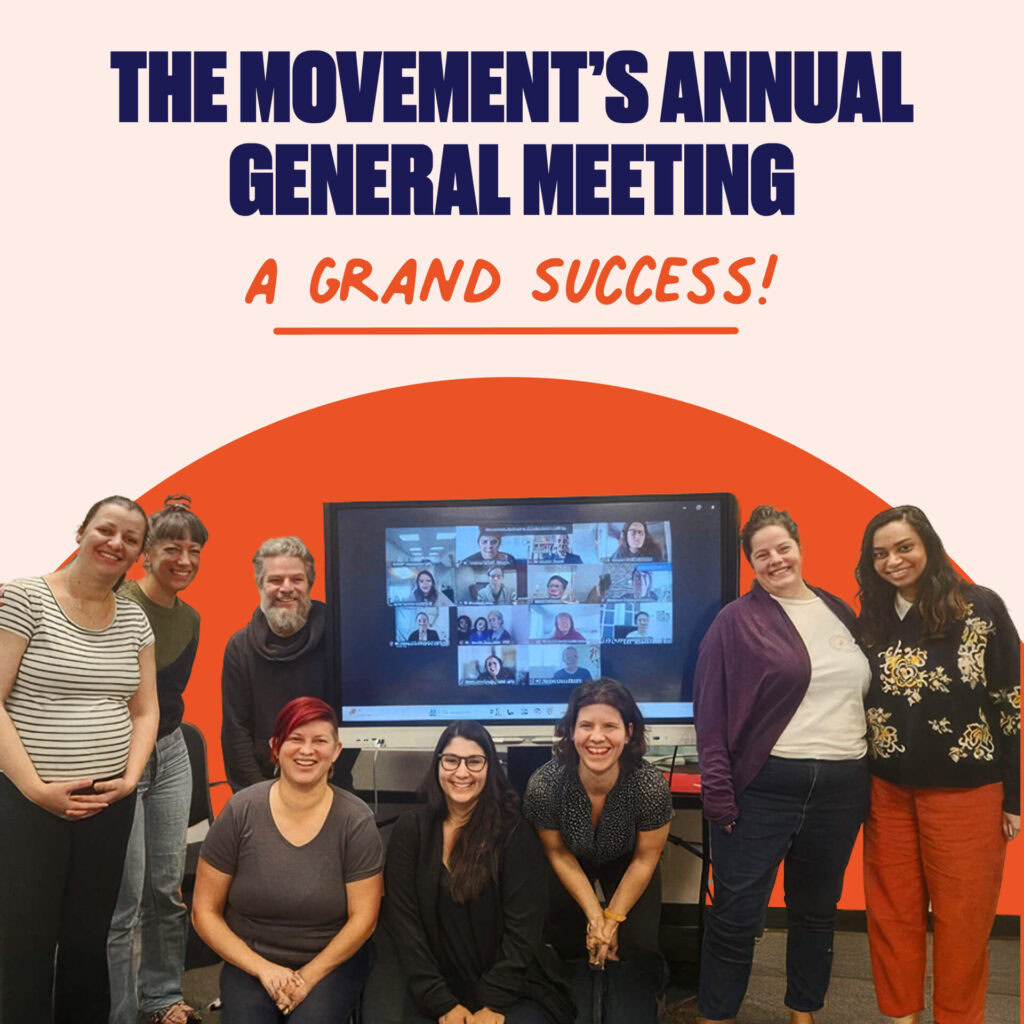
The gathering brought together people who had experienced difficult births, representatives from regional organizations, midwives and doulas, researchers, long-time activists, and newcomers eager to better understand the work of the Movement. Different levels of discussion took place: some emphasized the importance of filing complaints about systemic failures, while at other times we translated this understanding of needs into solutions to move forward.
What everyone had in common was a shared desire to address obstetric violence directly and to protect rights during pregnancy and postpartum. This diversity shaped both the tone and the focus of the weekend.
When Outrage Becomes Collective Strategy
The Grand Gathering was organized around collective outrage related to perinatal inequities. But the intention was to channel that anger, not remain consumed by it.
Participants revisited the same realities identified in the Movement’s regional tour last year:
-Inequitable access to services
-Hospital-centric birth culture
-Inconsistent information
-Gaps in resource allocation
Dedicated workshops were held to brainstorm ways to respond to these realities. “Together, we identified major potential actions to improve people’s experiences and transform the culture of childbirth,” Sarah explains. “As general coordinator, seeing that key ideas discussed in recent months are emerging as priority areas reassures me about the reflections we’ve had.”
To participant Kate Vineberg, the difference between individual frustration and collective power became clear. “Anger is useful, it pushes us to move forward, to raise our voices, to disrupt what isn’t working. But individual anger alone does not move systems. We need collective action, pressure from all sides, applied together, until it becomes impossible to ignore.”
Presenting the Framework: A Theory of Change
A key moment of the weekend was the presentation of The Movement’s Theory of Change. Instead of being delivered as a technical diagram or traditional presentation, it was shared as a story rooted in lived experience.
“The Theory of Change was presented as a story to illustrate the experiences of the people we work with and those we would like to work with more of,” Sarah explains.
For some participants, their understanding was deepened through conversations. “I didn’t retain a great deal at first,” admits Josianne Nault. “The anecdotes were great, but I only made the connection to the theory after discussing it with the organizers.”
Others found clarity once the structure was shared. “The presentation of the Theory of Change, and the posters displayed in the room, clarified The Movement’s future direction,” said Tania Bond, Chair of the Board of Directors. “These discussions deepened understanding of what the Movement represents for both members and the broader community.”
Kate described what she began to understand over the course of the weekend: “What’s emerging is a strategy with short- and long-term horizons: 1 year, 5 years, and beyond.”
The framework provided a shared reference point, allowing participants to assess with actions are urgent and achievable, and moreover, how they align with The Movement’s broader goals.
From Conversation to Action
The Gathering’s workshops were structured to go beyond open discussion. Participants rotated between tables that were organized around key issues, examining the proposed actions from various angles and evaluating potential impact and feasibility.
“The structure of three tables organized around three key issues was particularly impactful,” Kate reflects. “It allowed us to consider different perspectives, reflect on the impact of proposed actions, and assess their importance to the people directly involved. It encouraged deeper, multi-angle thinking rather than reactive discussion.”
Across the workshops, several priorities became clear:
–Informing expectant parents of all available options regarding prenatal care providers and birthing locations
–Transforming the dominant hospital-centric perception of childbirth
–Improving documentation and allocation of reproductive health resources
–Empowering healthcare professionals to empower birthers and their ability to support informed decisions
–Amplifying the voices of those most directly affected
For participant Kim Couture, “advocacy and popular education tools to support the organization of women’s and birthing people’s voices” is one of the most pressing goals.
Geneviève Dessureault explains influencing the broader culture surrounding perinatal care feels central. She described the Gathering as “an inspiring breath of fresh air” that made her “want to take action.”
Kate highlighted the need to update the Ma Grossesse website and to give more responsibility to perinatal care providers for the effect of care on the people experiencing it, as some of the most important and feasible initiatives in the short term.
Some participants expressed a need for clearer facilitation or more time to formulate demands. But even those sentiments reflected a shared conclusion: it’s imperative for ideas to move into implementation and execution.
“These projects have been discussed many times,” says Barbara Finck-Beccafico, President of the Quebec Association of Doulas. “Now it’s time to implement them.”
Strengthened Alignment Across Quebec
Beyond clarifying priorities, the Grand Gathering was able to strengthen cohesion across Québec’s perinatal advocacy ecosystem. “There were some excellent exchanges,” Sarah reflects. “People met, witnessed the passion and experience of others, and shared successes and challenges. This in itself is a positive outcome.”
Tania Bond says she left with “concrete strategic ideas for advocating for prenatal rights” as well as greater clarity about how her involvement strengthens advocacy across the province.
Similarly, Élise Dagenais, project coordinator, notes that even though the immediate impact is still being assessed, the Grand Gathering “has undeniably strengthened cohesion and a strong sense of belonging among the participants.”
Kate emphasized the importance of the Movement serving as an umbrella organization to represent a shared voice that aligns stakeholders around common ground without duplicating efforts. “That alignment gives me hope,” she says.
What’s Coming Next
The Grand Gathering did not end with grand symbolic declarations. Rather, it concluded by highlighting concrete solutions, as well as a renewed commitment to action within the community.
For Sarah, the power is now with the people. “What gives me momentum is that the people present are motivated to change things. The problems identified during the tour seem representative of lived realities,” she explains. “The proposed solutions seem to stand out sufficiently within our ecosystem while also leading to avenues for collaboration to increase our impact.”
This collaborative moment demonstrated that lived experience is not separate from strategy. On the contrary, it forms its foundation. The next step will be taking action: developing tools, strengthening advocacy efforts, mobilizing members, and ensuring that the identified priorities translate into tangible changes.
The Grand Gathering marked a shift from conversation to coordination, and what comes next will determine how that shared commitment reshapes perinatal care in Québec.