What does it mean to be present in our bodies in a society that so often encourages us to disconnect from them?
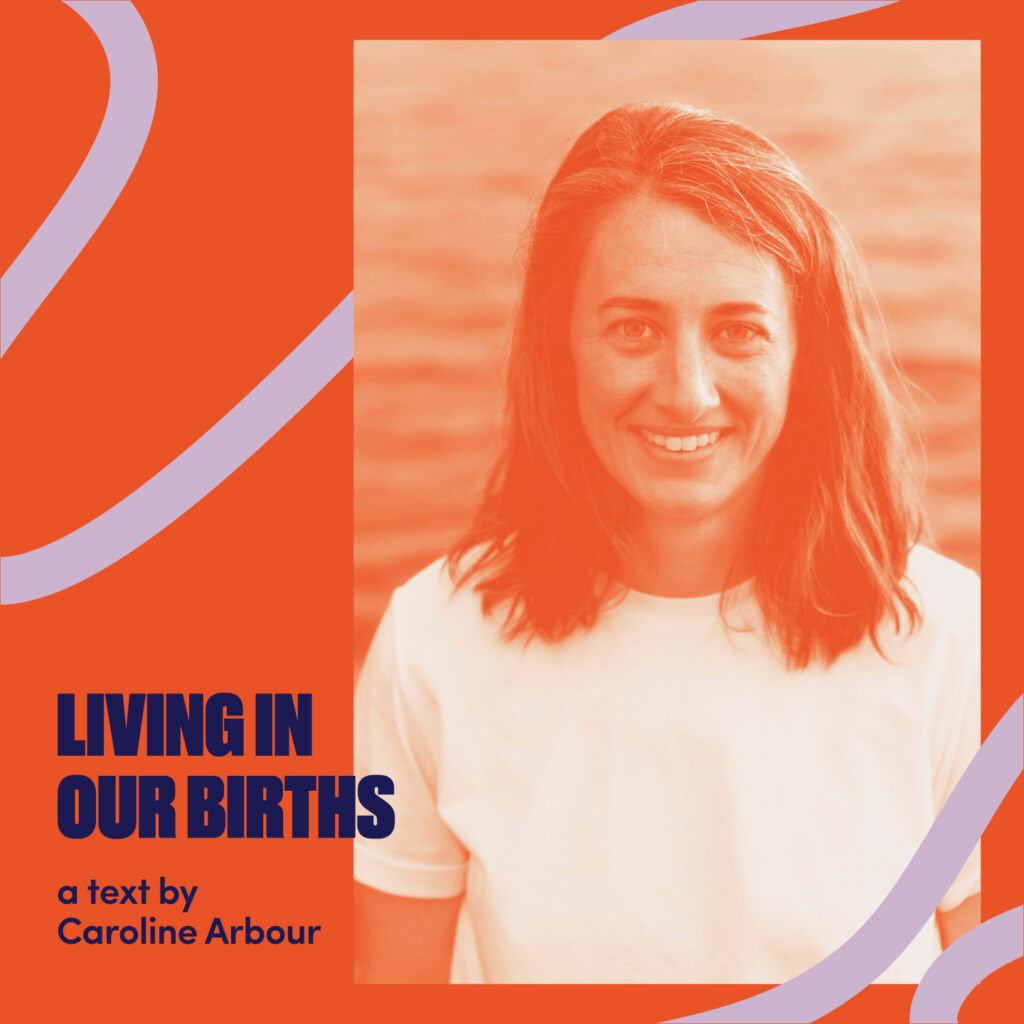
Physiotherapist, author, columnist, and speaker Caroline Arbour explores the scientific, historical, cultural, and emotional roots of suffering. As founder of the Inhabiting Our Bodies mission, she examines the forces that shape our relationship with our bodies and invites readers to reflect on everything that connects us.
Caroline encourages those giving birth to reclaim their bodies and honour their power while trusting themselves. In doing so, she hopes to move the conversation toward healing and a renewed connection with ourselves.
Note: Like the legends that help us interpret a map, several definitions have been included at the end of this text to clarify the meaning of the key terms used throughout.
I drew a blank card when I was invited to write this piece. I feel privileged to hold this card in my hands as I begin this writing journey, and it leaves me wondering: Is there a way to play it that could be meaningful both for the bodies that give birth, the children they bring into the world, and the births we try to inhabit without always knowing how?
I don’t yet know which words or ideas will fill this blank space. Everything is possible, and there is so much to (re)think and (re)build. So many practices to challenge, beliefs to redefine, knowledge to share, and obstacles to overcome.
I want to find ways of playing that allow our fears to be released and our confidence to take root deep within us.
Power
A blank card is, first and foremost, a form of power—a chance to choose and the freedom to act. I want to (re)place this card in the hands of those giving birth. It is theirs to decide whether to keep it. Theirs to decide how to play it. Theirs to choose whether to entrust it to someone else.
Our bodies are rich and immensely resilient territories. They hold resources that are still too often unknown, misunderstood, undervalued, or overlooked. Since the beginning of time, they have been capable of carrying life and bringing it into the world. This power lies deep within us, carrying with it both immense strength and profound responsibility.
And yet, for centuries, our world has been built in a way that has gradually shifted more and more power into the hands of systems, leaving us with an ever-increasing share of responsibility instead. This dynamic has existed for so long that it has become normalized.
“The entire hospital system tends to make the patient passive and childlike (just as society tends to make women passive and childlike).”
— Marie Uguay, Québec poet
Pregnant people navigate their pregnancies as best they can, through a constant downpour of opinions coming from every direction and the dense fog of fear-based messages our society continues to send.
Most of the women I meet fear “tearing” during childbirth, without realizing that another kind of fracture has already begun within them, pulled in every direction by the distortion of so many conflicting opinions. What often goes unrecognized is that bringing our posture* and our confidence into alignment with our centre encourages greater fluidity and minimizes resistance—and therefore tearing—during childbirth.
Everyone wants what is best for them and for the baby. They are “taken care of.” The intentions are good, sincere, and well meaning. Yet despite those intentions, women are too often taught how to navigate a system before they are taught how to find their way within themselves.
Too often, in search of guidance as they experience the transformation of their bodies, they place a portion of their power into the hands of others—sometimes a little, sometimes a great deal, and sometimes all of it.
Autonomy*
We forget that our bodies are capable. That our bodies know. Remembering is an act of (re)connecting with ourselves. It is a learning process guided by the intelligence of our bodies and supported by the sharing of our stories.
During my first pregnancy, I was overwhelmed by the extent of my own ignorance about what my body was undertaking. Every one of my cells was engaged in an act of creation that was stronger than my own will—freer and more powerful than the systems created to control it, all while leading me to believe those systems existed to protect me. I had learned to place all of my trust in others and in those systems.
Since then, I have had the privilege of learning to trust what is at work within me. I carefully gather knowledge, pay attention to the marks life leaves upon my body, cultivate moments of connection, and strive to share everything that helps nourish our trust in our bodies—a trust that has been starved for far too long.
Giving birth autonomously does not mean giving birth alone. It means giving birth with sovereignty—that is, without our power being limited by someone else’s. It is a blend of sisterhood*, science, and spirituality. It is the weaving together of collective autonomy.
Trust
Birth is anything but a story of control; it is a story of trust. It is about learning, both individually and collectively, to know, embrace, value, and honour what is at work within us. It is about putting the mind in service of the body, even though we have grown accustomed to doing the opposite. The signs are already there, written into our very bodies.
The journey toward birth is one that allows our bodies to return to their wildness*.
It is a path shaped by those who carry life and supported by those around them. A path that leads to greater autonomy in childbirth, greater respect for our power… and births that are more fully inhabited.
“And I draw closer to all the women of the world, sweating and powerful. I bind myself to them in love. I merge with their faith, their sap, their blood, their saliva, their sex. Their warm breath on my neck, the scent of blood in my mouth, their waters on my thighs. I give birth with them.”
— Femme forêt (Forest Woman), Anaïs Barbeau-Lavalette
Definitions to Support the Ideas Shared in This Text
Autonomy: More than the ability to do something independently, autonomy also refers to the right to govern oneself and the freedom to act.
Wildness (Ensauvagement): A return to a wild* or undomesticated state.
Posture: The position of the body in space or one’s attitude toward a situation.
Power: The ability or possibility to do something. The capacity to act. Having the means to take action.
Wild: Describes a place that has remained untouched and unaltered by human intervention. More broadly, something that organizes itself spontaneously outside of imposed rules and regulations.Sisterhood: The bond between women who share common lived experiences because of their womanhood. Solidarity among women.